

Kenya’s film industry is no longer emerging.
It is moving quickly, and if you are not prepared, it will pass you by.
Everywhere you look, there are Kenyan films on Netflix, local stories winning international awards, and creators finally getting global attention.
On the surface, it looks like the perfect time to chase a filmmaking dream. But behind the scenes, many aspiring filmmakers are stuck. They have ideas. They have passion. Some even have raw talent. Yet their work never leaves the hard drive.
This is the painful truth few people talk about: talent alone does not open doors anymore.
The industry now demands technical precision, professional storytelling, and an understanding of how real productions work. Without the right training, you can spend years shooting projects that never reach industry standards, years that cost you time, confidence, and momentum.
A good film production school does more than teach you how to use a camera. It exposes you to real-world workflows, connects you with mentors and collaborators, and helps you turn creative ideas into films that can actually compete in the market.
The wrong choice, however, can delay your growth and leave you feeling invisible in a rapidly advancing industry.
If you are serious about building a filmmaking career in 2026, choosing the right path is not optional.
This list exists to help you make that decision wisely.
Why Is Choosing a Film Production School in Kenya Important in 2024?
Film production in Kenya has shifted from a passion-driven to a career-driven approach.
Here is why formal training is more relevant than ever:
- Industry standards are rising
Broadcasters and streaming platforms now demand professional-quality work. - Access to equipment and mentorship matters
Film schools provide cameras, studios, editing suites, and working professionals that you cannot easily access alone. - Networking is currency
Most film jobs come from connections built in school, writers, directors, producers, and crew. - Kenya’s creative economy is growing
Government incentives, local film funds, and international co-productions are creating real opportunities.
In short, the right school accelerates your entry into the industry and improves your chances of long-term success.
Top 10 Best Film Production Schools in Kenya 2026
Choosing a film school is not just about prestige. It is also a financial decision that can shape your career path for years.
Below are Kenya’s leading film production institutions in 2026, ranked by reputation, program depth, and industry impact, with realistic fee estimates to help you plan properly.
1. Kenya Institute of Mass Communication (KIMC)

Estimated Fees (2025):
- Diploma programs: KES 120,000 – 160,000 per year
- Total (3 years): KES 360,000 – 480,000
KIMC is one of the most prestigious government media institutions in Kenya, with a long-standing reputation for producing industry-ready professionals.
Programs Offered:
- Diploma in Film & Video Production (Directing, Editing, Sound, Camera)
- Diploma in Animation and Gaming
Duration: 3 years
Location: Nairobi
Why It Ranks #1:
Government backing, affordable fees, strong credibility, and access to national broadcasters and public media projects make KIMC unmatched for value and employability.
2. Africa Digital Media Institute (ADMI)

Estimated Fees (2025):
- Diploma in Film & TV Production: KES 550,000 – 650,000 total
- Certificates: KES 120,000 – 250,000
ADMI is widely regarded as Kenya’s most modern creative media school, blending filmmaking with digital innovation.
Programs Offered:
- Diploma in Film & Television Production
- Certificate courses in Video Production
Duration: 2 years
Location: Nairobi (Kenyatta Avenue)
Why It Ranks High:
Industry partnerships, internships, and a strong focus on career placement make ADMI ideal for students targeting commercial and digital film careers.
3. Kenya Film School

Estimated Fees (2025):
- Short courses: KES 40,000 – 80,000
- Full programs: KES 150,000 – 300,000
Established under government initiatives, Kenya Film School focuses on building practical filmmaking skills.
Programs Offered:
- Screenwriting
- Directing
- Cinematography
- Sound Engineering
- Video Editing
Duration: Varies
Location: Nairobi
Why It Ranks High:
Its affiliation with the Kenya Film Commission gives students rare access to national film resources and networks.
4. Multimedia University of Kenya (MMU)

Estimated Fees (2025):
- Bachelor’s degree: KES 160,000 – 180,000 per year
- Total (4 years): KES 640,000 – 720,000
- Diploma programs: KES 90,000 – 120,000 per year
MMU offers one of the few degree-level film programs in Kenya.
Programs Offered:
- Bachelor of Film Production and Animation
- Diploma in Film and Production
Duration: 4 years (degree)
Location: Nairobi
Why It Ranks High:
A recognized degree opens doors to advanced production roles, teaching positions, and international opportunities.
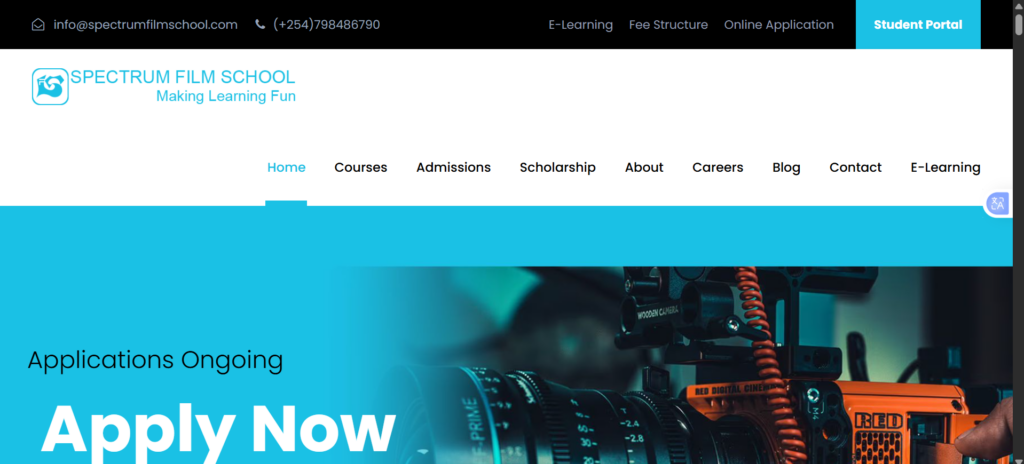
5. Spectrum Film School
Estimated Fees (2025):
- Diploma programs: KES 300,000 – 450,000
- Short courses: KES 50,000 – 120,000
Spectrum is a private institution known for immersive, hands-on filmmaking.
Programs Offered:
- Film Production
- Drone Cinematography
- Online and Short Courses
Location: Nairobi
Why It Ranks High:
Strong focus on African storytelling, modern equipment, and creative freedom.
6. Kamata School of TV and Film Production

Estimated Fees (2025):
- Certificate programs: KES 80,000 – 150,000
- Diploma programs: KES 200,000 – 300,000
Kamata is known for producing practical, work-ready graduates.
Programs Offered:
- TV Production
- Film Production
Location: Nairobi
Why It Ranks High:
Close collaborations with TV stations and an entrepreneurial approach to filmmaking.
7. Visualdo Institute

Estimated Fees (2025):
- Diploma in Film Production: KES 180,000 – 250,000
- Short videography courses: KES 40,000 – 90,000
Visualdo emphasizes real-world filmmaking experience.
Programs Offered:
- Film Production
- Videography (Basic & Advanced)
Location: Nairobi
Why It Ranks High:
Students complete capstone projects and gain exposure to active production environments.
Other Notable Film Schools in Kenya (2025)
Shang Tao Media Arts College
Estimated Fees: KES 250,000 – 400,000
Strong focus on animation, VFX, and multimedia.
Talanta Institute
Estimated Fees: KES 50,000 – 120,000
TVET-based training with an emphasis on practical media skills.
Zetech University & KCA University
Estimated Fees:
- Certificates/Diplomas: KES 90,000 – 150,000 per year
Ideal for entry-level film and media education.
Key Skills You Will Master
Regardless of the school you choose, a top-tier film program in 2024 will guide you through the entire production pipeline:
- Pre-Production: Scriptwriting, storyboarding, and casting.
- Production: Cinematography, lighting, and sound recording.
- Post-Production: Non-linear editing (Premiere Pro/DaVinci Resolve), color grading, and VFX.
Factors to Consider When Choosing a Film Production School in Kenya
Choosing a film production school is not just an academic decision. It is a career move. The school you select will influence your technical skills, industry access, and how quickly you transition from student to working filmmaker.
Before enrolling, consider the following critical factors.
1. Curriculum Relevance to the Current Industry
Film is a practical industry. What you learn must match how productions are actually run today.
Look closely at:
- Course content and specializations
- Balance between theory and hands-on production
- Coverage of modern workflows such as digital cinematography, post-production, and streaming content
A strong curriculum should prepare you for real sets, real deadlines, and real clients, not outdated theory alone.
2. Practical Training and Equipment Access
Access to professional equipment can accelerate your learning more than anything else.
Consider:
- Availability of cameras, lighting kits, sound gear, and editing labs
- Studio access hours for students
- Number of practical projects completed before graduation
The best schools prioritize doing over watching. If you are not shooting, editing, and producing regularly, you are falling behind.
3. Industry Exposure and Networking Opportunities
In film, who you know matters almost as much as what you know.
Ask whether the school provides:
- Internships or industry attachments
- Guest lectures by active professionals
- Partnerships with TV stations, production houses, or streaming platforms
Strong networks help you secure your first job, your first crew, and your first paid project.
4. Faculty Experience and Mentorship
Your instructors should be practitioners, not just academics.
Evaluate:
- Whether lecturers are active filmmakers
- Their industry credits and experience
- Availability for mentorship beyond classroom hours
Learning from professionals who understand industry pressure, budgets, and creative constraints is invaluable.
5. Certification Level and Career Goals
Different schools offer different qualifications, and each serves a different purpose.
Choose based on your goals:
- Certificates: Short-term, skill-focused entry
- Diplomas: Balanced technical and practical training
- Degrees: Academic depth and long-term career flexibility
There is no “better” option, only the one that aligns with your intended career path.
6. Cost, Value, and Return on Investment
Film school is an investment. Focus on value, not just price.
Consider:
- Total cost of the program
- Access to equipment and facilities is included in fees
- Job placement support or alumni success
A cheaper school with poor resources can cost you more in the long run than a higher-priced institution with strong industry outcomes.
7. Alumni Success and Industry Reputation
A school’s graduates reflect the quality of its training.
Research:
- Where alumni are currently working
- Notable films, shows, or companies linked to former students
- The school’s reputation within the local film community
Institutions respected by the industry often open doors faster.
8. Class Size and Learning Environment
Smaller class sizes often mean more hands-on time and personal guidance.
Find out:
- Student-to-equipment ratio
- Level of instructor engagement
- Opportunities for collaboration with classmates
Film is collaborative by nature. The right environment encourages teamwork, creativity, and growth.
9. Location and Industry Access
Proximity matters in filmmaking.
Schools located near:
- Production hubs
- TV stations
- Creative communities
Offer better exposure to opportunities, auditions, and freelance work while studying.
10. Long-Term Support After Graduation
The best film schools do not stop supporting you after graduation.
Look for:
- Alumni networks
- Job boards or referral systems
- Continued access to facilities or mentorship
Film careers are built over time. Ongoing support can make a significant difference.
Conclusion
Film education in Kenya spans a wide range of options designed for different budgets and career goals.
Public and government-supported institutions such as KIMC and Kenya Film School remain the most cost-effective choices, especially for sponsored students, with annual fees that can fall below KES 100,000.
On the other hand, private institutions like ADMI and Visualdo justify their higher fees through intensive, hands-on training, modern facilities, and closer industry integration.
The key is not choosing the cheapest or the most expensive school, but the one that aligns with your long-term filmmaking vision. Take time to confirm current fees, explore scholarship opportunities, and physically visit campuses to understand the learning environment before committing.
If you want deeper guidance, updated school comparisons, and practical insights into building a sustainable film career in Kenya, explore more resources on iWayThrills. Start making informed decisions today, and position yourself to thrive in Kenya’s fast-growing film industry.
FAQs About Film Production Schools in Kenya
What is the cheapest film school in Kenya?
Government institutions like KIMC (KES 30,000–50,000/year sponsored) or Visualdo (KES 50,000+/year) are among the most affordable.
How much does a film diploma cost in Kenya?
Ranges from KES 100,000–500,000 total, depending on the school and duration.
Are there scholarships available?
Yes, e.g., Spectrum’s 50% programs or government aid for public schools.
What jobs follow graduation?
Director, cinematographer, editor, producer, or roles in TV/advertising/digital content.
It’s a pity you don’t have a donate button! I’d definitely donate to this fantastic blog! I guess for now i’ll settle for bookmarking and adding your RSS feed to my Google account. I look forward to new updates and will share this blog with my Facebook group. Talk soon!