

You’ve watched countless movies. You’ve lost hours binging entire seasons. And at some point, a thought creeps in and won’t let go: How does something like this even get made?
Because from the outside, filmmaking feels overwhelming. Big cameras. Huge crews. Massive budgets. Fancy credits rolling for minutes. It can make you feel like film is this closed world, something only “real professionals” are allowed to touch. And if you’ve ever had a story in your head, that gap between watching films and making one can feel intimidating.
So here’s the real question: what is filmmaking, actually?
Filmmaking is not just pressing record and hoping for magic. It’s the step-by-step process of taking an idea, sometimes just a rough thought or a half-written scene, and shaping it into a visual story that people can see, hear, and emotionally connect with. It’s planning, problem-solving, creativity, and structure working together from the very first idea on paper to the final image on screen.
Once you understand what filmmaking really is, it stops feeling mysterious and starts feeling possible. Let’s break it down in simple, human terms.
Why Is Filmmaking Important Today?
Filmmaking has always mattered, but today, it carries more weight than ever before.
In a world driven by screens, attention, and storytelling, film has become one of the most powerful ways to communicate ideas, emotions, and truth.
Here’s why filmmaking is especially relevant right now.
a) Stories Shape Culture and Identity
Films do more than entertain. They shape how people see themselves and the world around them. Movies influence language, fashion, values, and social behavior. A single film can spark national conversations, challenge long-held beliefs, or shine a light on stories that have been ignored for years.
Through filmmaking, cultures are documented, histories are preserved, and perspectives are shared across borders. Long after trends fade, films remain as records of how people lived, thought, and felt in a particular time.
b) The Film Industry Is Growing Faster Than Ever
The rise of streaming platforms and digital media has completely changed the filmmaking landscape. Platforms like Netflix, YouTube, Showmax, and Amazon Prime are constantly looking for new content, new voices, and fresh stories.
Filmmaking is no longer confined to Hollywood or big studios. Independent filmmakers, small production teams, content creators, and even individuals are producing films that reach global audiences.
This shift has opened doors for storytellers from different backgrounds to share authentic stories without waiting for traditional gatekeepers.
c) Filmmaking Creates Jobs and Real Career Paths
Behind every film is a large network of professionals working together. Filmmaking creates employment for actors, screenwriters, directors, editors, cinematographers, sound designers, production managers, costume designers, makeup artists, and many others.
Beyond creative roles, filmmaking also supports technical, administrative, and business careers. As the industry expands, so do opportunities for sustainable income, freelancing, and long-term professional growth.
d) Access Has Never Been Easier
One of the biggest reasons filmmaking matters today is accessibility. You no longer need expensive equipment or a major studio to get started. A smartphone, a clear story, and basic editing knowledge are enough to begin learning and creating.
Technology has lowered the barriers to entry, allowing more people to experiment, improve, and share their work. This accessibility means filmmaking is no longer reserved for a few; it’s open to anyone willing to learn and create.
In short, filmmaking today is powerful, relevant, and within reach. It shapes culture, fuels a growing global industry, creates jobs, and gives everyday people the tools to tell meaningful stories.
What Is Filmmaking?
Filmmaking is the complete process of creating a film, from the very first idea to the moment an audience finally watches it. It is not a single action or skill, but a series of connected stages that work together to turn a story into a finished visual experience.
At its core, filmmaking involves planning what the story will be, capturing it on camera, shaping it through editing, and delivering it to viewers.
Whether you are making a short film, a documentary, a TV series, a commercial, or a full-length movie, the filmmaking process follows the same foundational structure.
Understanding these stages makes filmmaking feel less complicated and far more approachable.
The Main Stages of Filmmaking
1. Development – Where Everything Begins
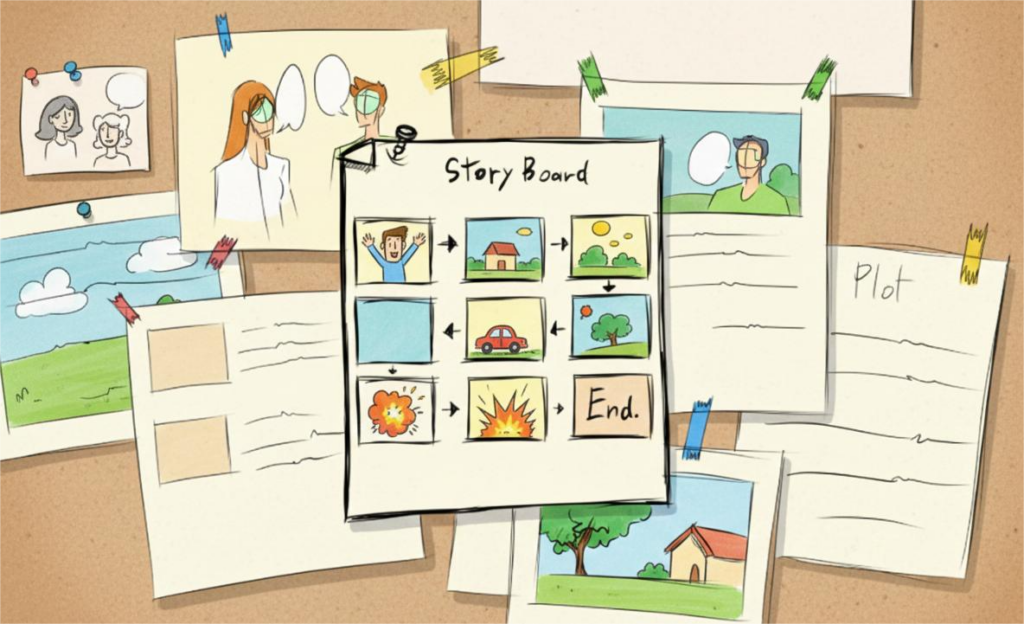
Development is the foundation of the entire film. This is where ideas are created and refined before any money is spent or cameras are used.
This stage includes:
- Developing the core idea or concept
- Writing and revising the script
- Defining the purpose, tone, and direction of the project
Development is where problems are solved on paper before they become expensive mistakes on set.
Without a clear story and script, the rest of the filmmaking process has nothing to stand on. Simply put: no script, no film.
2. Pre-Production – Preparing for the Shoot
Pre-production is the planning and organization phase. Everything needed to shoot the film is prepared here, so production can run smoothly.

This stage includes:
- Casting actors
- Selecting and securing locations
- Creating a detailed shooting schedule
- Budgeting and resource planning
- Rehearsals and technical preparations
Pre-production is about reducing chaos. The better this stage is handled, the smoother and more efficient the filming process will be. It is where filmmakers make sure everyone knows what needs to happen before the first scene is shot.
3. Production – When the Camera Rolls
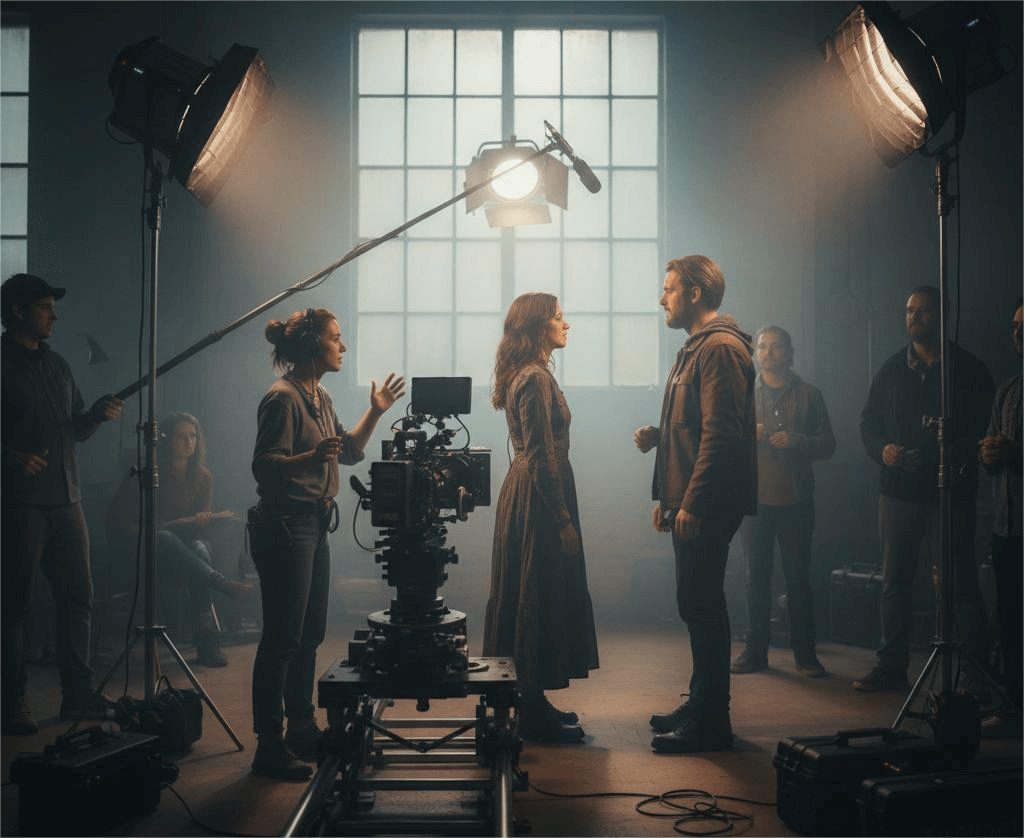
Production is the stage most people associate with filmmaking. This is when the film is actually shot.
During production:
- Cameras record scenes
- Actors perform their roles
- Directors guide performances
- Crew members handle lighting, sound, and camera work
This stage turns planning into real footage. However, while it feels like the most important part, production is only one piece of the larger filmmaking process. What happens before and after it is just as critical.
4. Post-Production – Shaping the Story
Post-production is where the film truly comes to life. Raw footage is transformed into a coherent, emotional story.
This stage includes:
- Editing scenes together
- Adding sound effects, dialogue, and music
- Color correction and visual consistency
- Visual effects, if needed
Many filmmakers agree that a film is “made” in the edit. Decisions in post-production can change pacing, emotion, and even the meaning of the story.
5. Distribution – Reaching the Audience
Distribution is the final stage of filmmaking. It determines how and where people will watch the film.
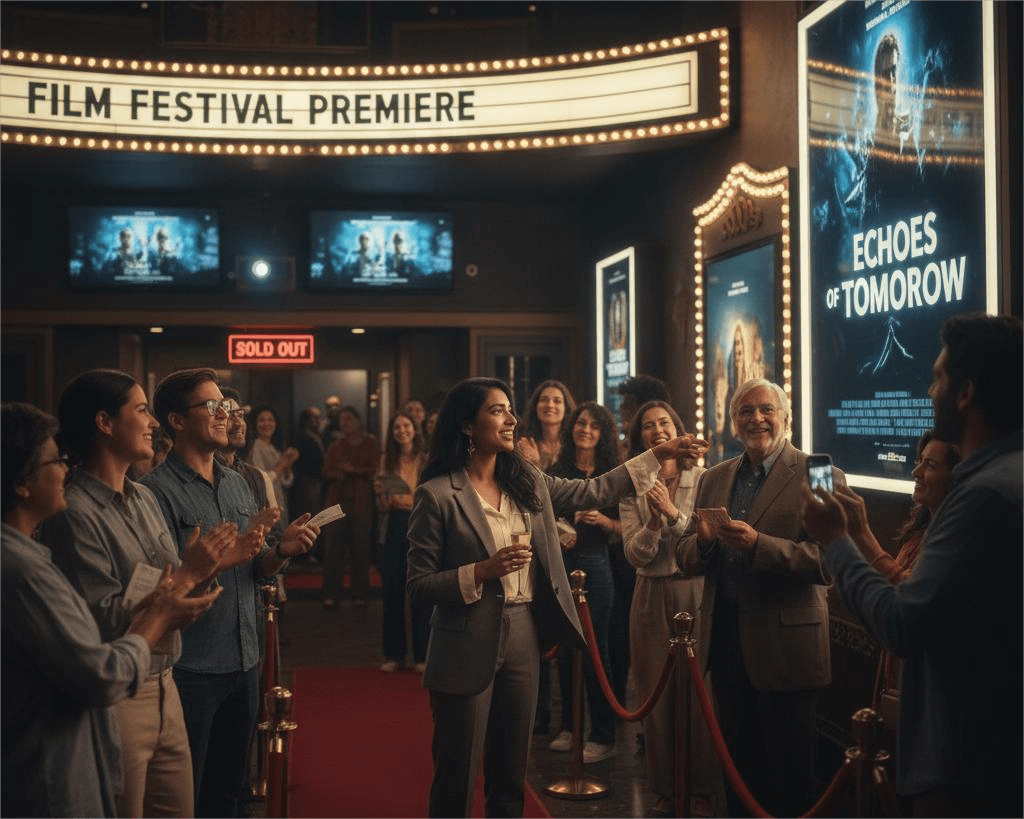
This can include:
- Cinema releases
- Television broadcasts
- Streaming platforms
- Film festivals
- Online platforms like YouTube
A film is not truly complete until it reaches its audience. Film Distribution ensures that the story, effort, and creativity invested in the film are finally experienced by viewers.
In simple terms, filmmaking is a journey. It starts with an idea, moves through careful planning and execution, and ends when the story finds its audience. Once you understand this process, filmmaking stops feeling complicated and starts feeling achievable.
What Does a Filmmaker Do?
A filmmaker oversees the entire storytelling process. Depending on the project, a filmmaker may:
- Write or develop the story
- Direct actors
- Manage the crew
- Make creative decisions
- Handle production logistics
In small projects, one person may do everything. In big productions, roles are shared across a large team.
Is Filmmaking Just for Professionals?
Not at all.
Filmmaking is for:
- Beginners
- Students
- Content creators
- Storytellers
- Businesses
- Anyone with a message to share
If you can tell a story, you can start learning filmmaking.
Conclusion
Filmmaking may look complex from the outside, but at its heart, it’s simply structured storytelling. It’s the process of taking an idea, shaping it with intention, and guiding it through clear stages until it becomes something people can watch, feel, and remember.
Once you understand how filmmaking works, from development to distribution, it stops feeling like a distant industry and starts feeling like a skill you can actually learn and use.
Every film you admire began as a simple idea and a written script. That’s where everything starts. A strong script gives direction to the cast, clarity to the crew, and purpose to the entire project. Without it, even the best camera and biggest budget fall apart.
If you have a story you want to tell but don’t know how to shape it into a compelling script, iwaythrills can help. From concept development to professionally written screenplays, iwaythrills offers scriptwriting services designed to turn raw ideas into production-ready stories.
Whether you’re working on a short film, series, or feature, start where filmmaking truly begins, with a powerful script.
Visit iwaythrills today and take the first serious step toward bringing your story to life.